

Wikimedia Commons · See source page for licence
Artist in the Global Art Registry
Honoré Daumier
1808–1879 · French
- Born
- 1808 · Marseille
- Died
- 1879 · Valmondois
995 works in the Collect24 Registry
Every work carries a permanent Collect24 Art ID, the way a book has an ISBN.
Honoré-Victorin Daumier was a French painter, sculptor, and printmaker whose works commented on social and political life in France from 1830 to 1870. He earned a living producing caricatures and cartoons for newspapers and periodicals like La Caricature and Le Charivari.
Read full biography
Honoré-Victorin Daumier (French: [ɔnɔʁe domje]; 26 February 1808 – 10 or 11 February 1879) was a French painter, sculptor, and printmaker, whose many works offer commentary on the social and political life in France, from the Revolution of 1830 to the fall of the Second French Empire in 1870. He earned a living producing caricatures and cartoons in newspapers and periodicals such as La Caricature and Le Charivari, for which he became well known in his lifetime and is still remembered today. He was a republican democrat (working class liberal), who satirized and lampooned the monarchy, aristocracy, clergy, politicians, the judiciary, lawyers, police, detectives, the wealthy, the military, the bourgeoisie, as well as his countrymen and human nature in general. Daumier was a serious painter, loosely associated with realism, sometimes blurring the boundaries between caricature and fine art. Although he occasionally exhibited at the Parisian Salon, his paintings were largely overlooked and ignored by the French public and critics of the day. Yet Daumier's fellow painters, as well as the poet and art critic Charles Baudelaire, noticed and greatly admired his work. Later generations would recognize Daumier as one of the great French artists of the 19th century, profoundly influencing a younger generation of impressionist and postimpressionist painters. Daumier was a tireless and prolific artist and produced more than 100 sculptures, 500 paintings, 1,000 drawings, 1,000 wood engravings, and 4,000 lithographs. Daumier came from a poor family and was working by the age of 12, first at a huissier de justice, then at a bookstore frequented by artists where he began to draw. He received some mentorship from Alexandre Lenoir, attended the Académie Suisse, learned lithography, and was producing advertisements, illustrations, and caricatures by the time he was twenty. After the July Revolution of 1830 he begin working for satirical political papers that were highly critical of the new monarch Louis Philippe I and his court. He was jailed for several months in 1832 after the publication of Gargantua, a particularly offensive depiction of the King, Louis Philippe. After his release Daumier resumed publishing political lithographs until the September Laws were passed in 1835, limiting the freedom of the press. Afterwards, his cartoons softened, the bourgeoisie and daily Parisian life were more frequent subjects, and when political subjects did appear they were oblique and veiled. Daumier experienced financial hardships and debt throughout much of his life. Daumier married Alexandrine Dassy in 1846 and moved to the Île Saint-Louis where they lived until 1863. He increasingly associated with writers, poets, painters, and sculptors there, including Baudelaire, Corot, Courbet, Delacroix among others, and began to paint in earnest. He spent his summers from 1853 onward in Barbizon and Valmondois, where artists of the Barbizon school and realist movement worked. As his desire to paint intensified, his enthusiasm for cartooning declined, as did his popularity with the public. Le Charivari stopped publishing his comics in 1860. A period of financial hardship followed, and from 1863–1865 he moved to a series of lodgings around Montmartre and lost contact with many friends. Le Charivari gave him a new contract in 1864 and he resumed making caricatures for an appreciative audience in Paris. Daumier moved to Valmondois in 1865. He experienced failing eyesight and poverty there, although he continued to produce lithographs and paint, often on the theme of Don Quixote. The French Third Republic granted him a pension in 1877, and the following year a major exhibition of his paintings was held in Paris, which received significant recognition in the final months of his life. Daumier died in February 1879. Various sources give conflicting dates regarding the day of his death: some state 10 February 1879, others 11 February.
Biography source: Wikipedia · CC BY-SA 4.0
Unclaimed estate profile
This profile was built from publicly available information. Nobody representing the estate of Honoré Daumier manages it yet. If you represent the estate or foundation, claim the profile to control the biography, portrait and registered works.
Claim this estate profileSpotted something incorrect? Sign in to suggest an edit — our editors review every change.
995
Registered works
995
In museum collections
0
In gallery collections
0
In private collections
Featured works
Selected registered works by Honoré Daumier
Selected from 995 works by Honoré Daumier in the Collect24 Registry.
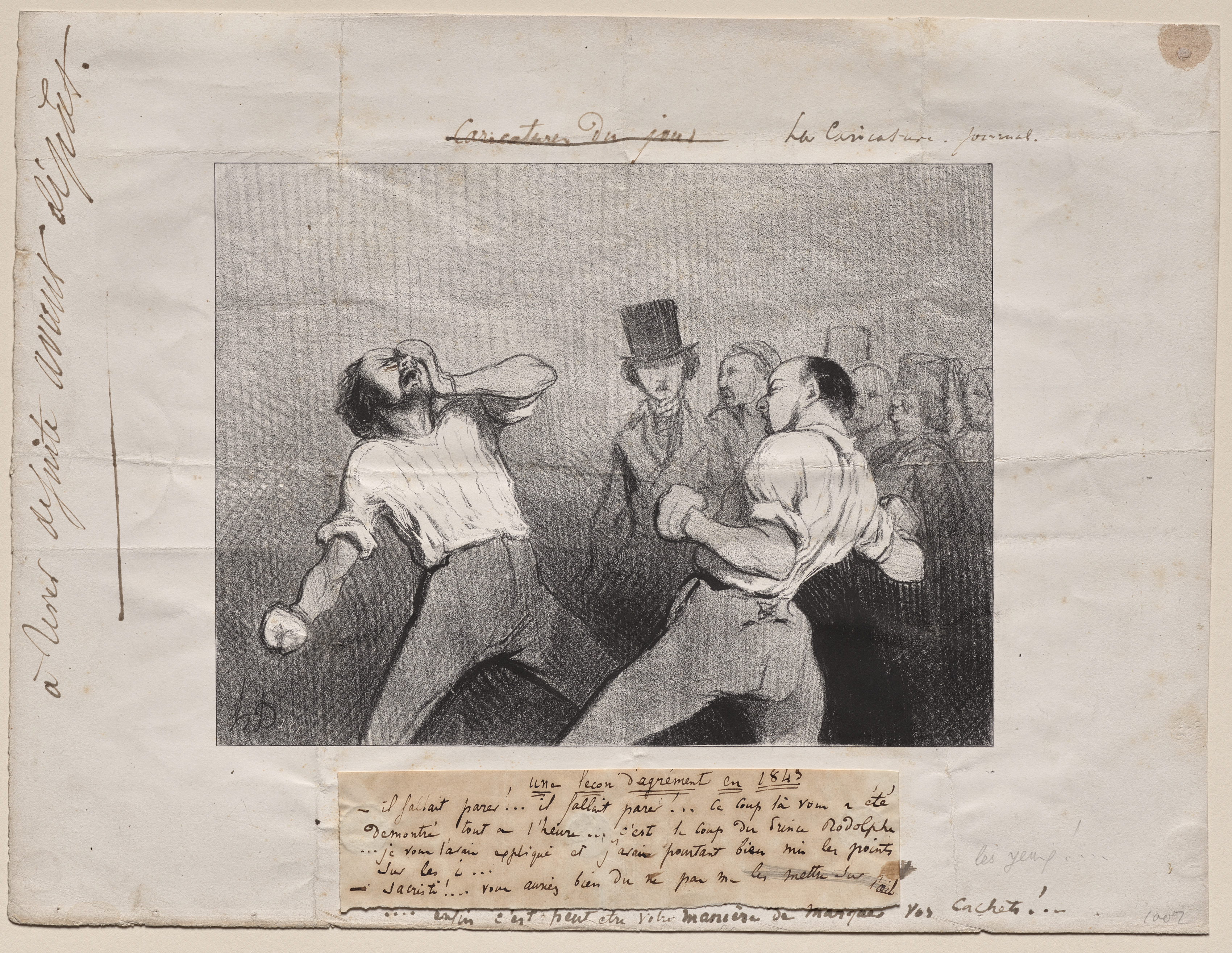
Honoré Daumier
Lesson in Understanding in 1843, 1843
lithograph
27.1 × 35.6 cm
Cleveland Museum of Art
C24-207020
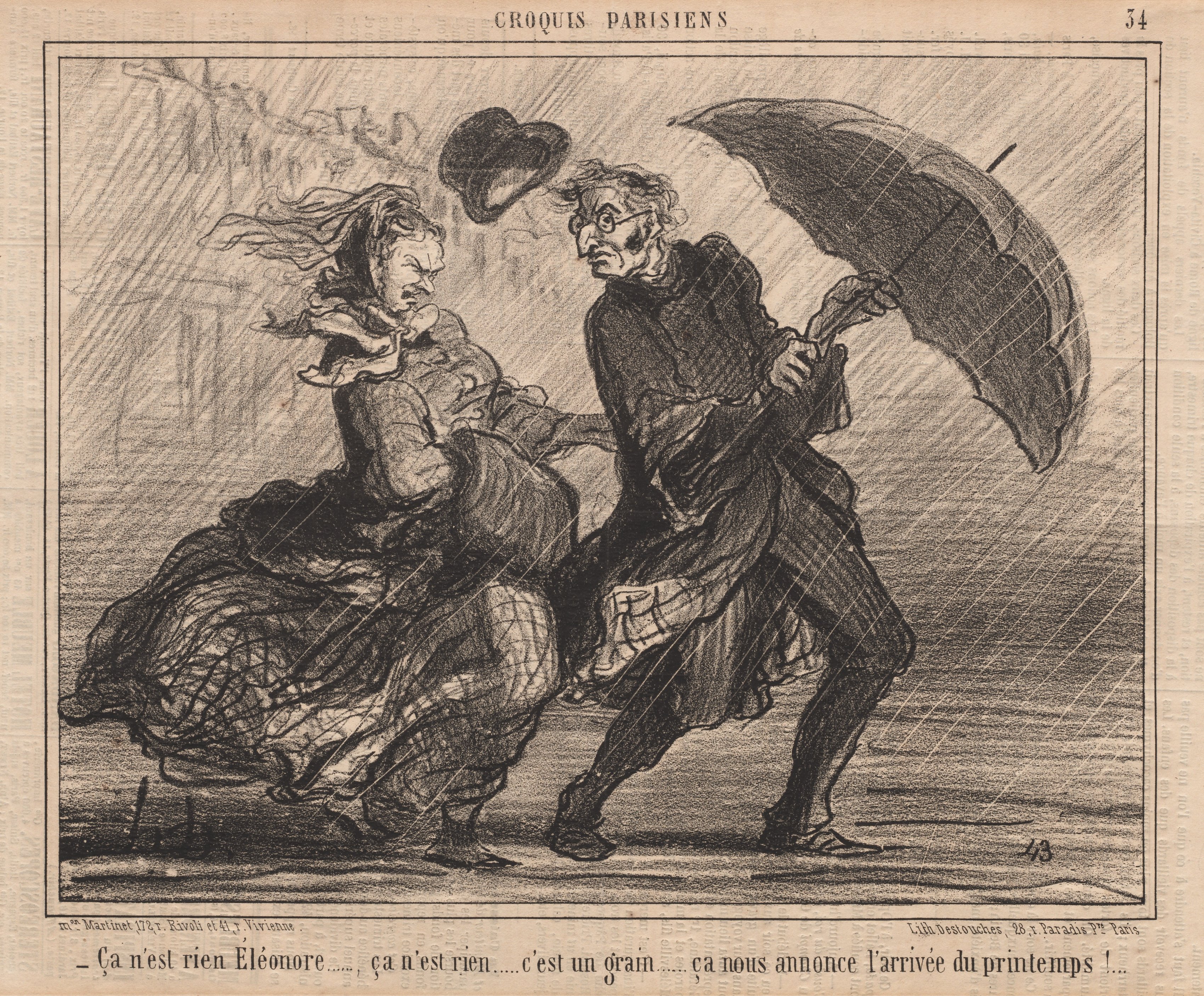
Honoré Daumier
It's nothing Eleanor..., 1857
lithograph
24.6 × 33.5 cm
Cleveland Museum of Art
C24-206290
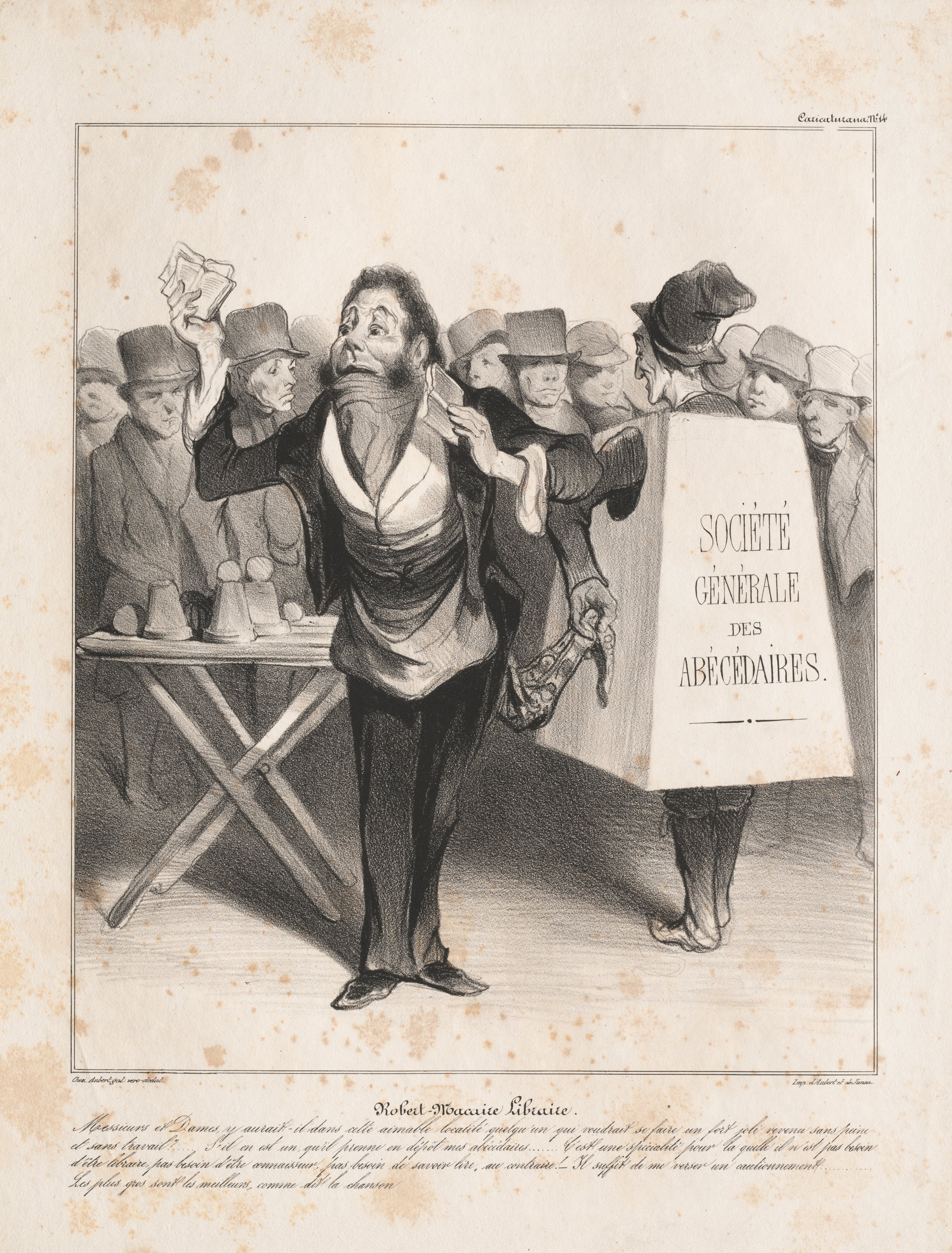
Honoré Daumier
Robert Macaire Bookseller, 1836
lithograph
36.2 × 27.8 cm
Cleveland Museum of Art
C24-205655
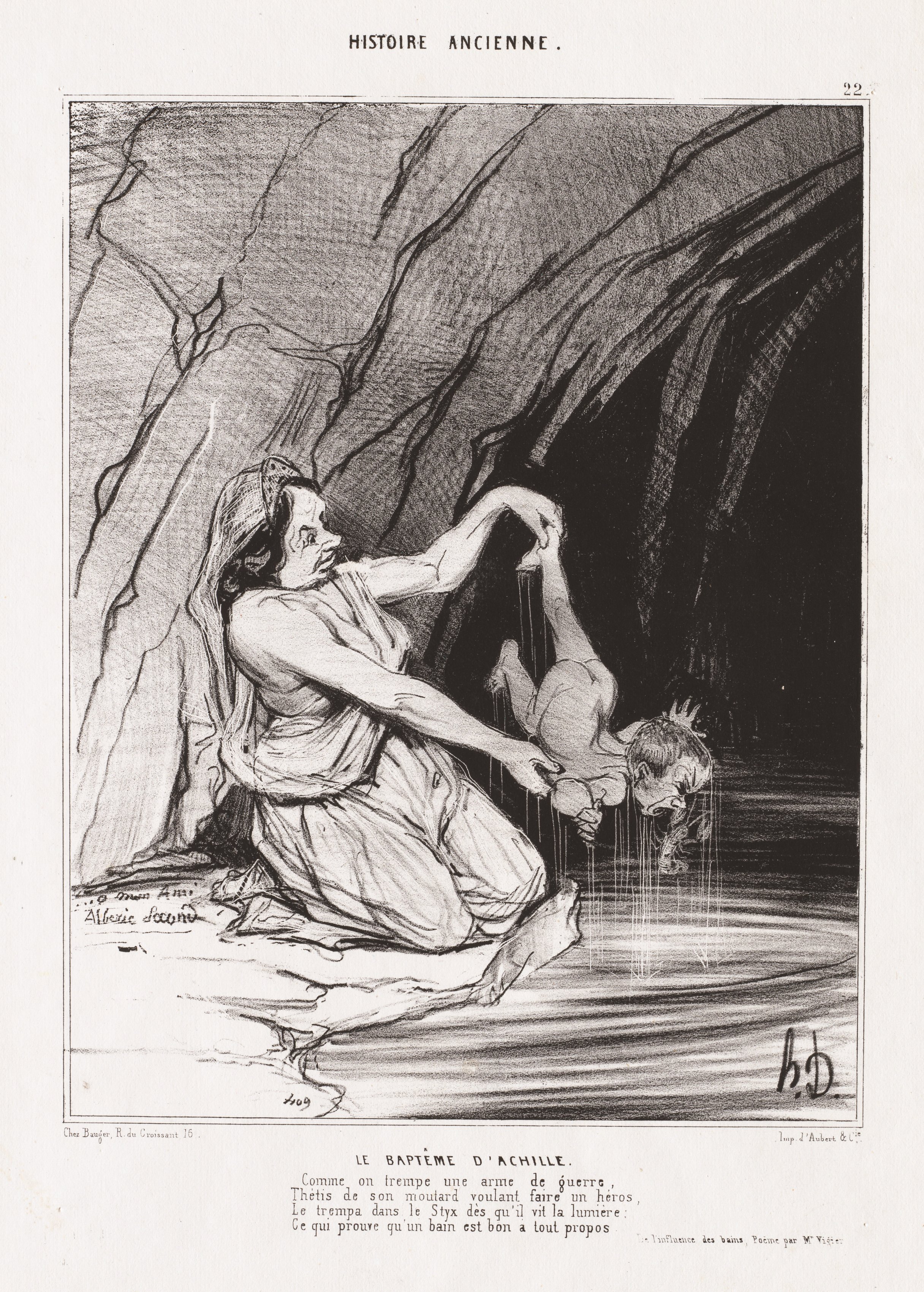
Honoré Daumier
The Baptism of Achilles, 1842
lithograph
33.6 × 25.5 cm
Cleveland Museum of Art
C24-205118
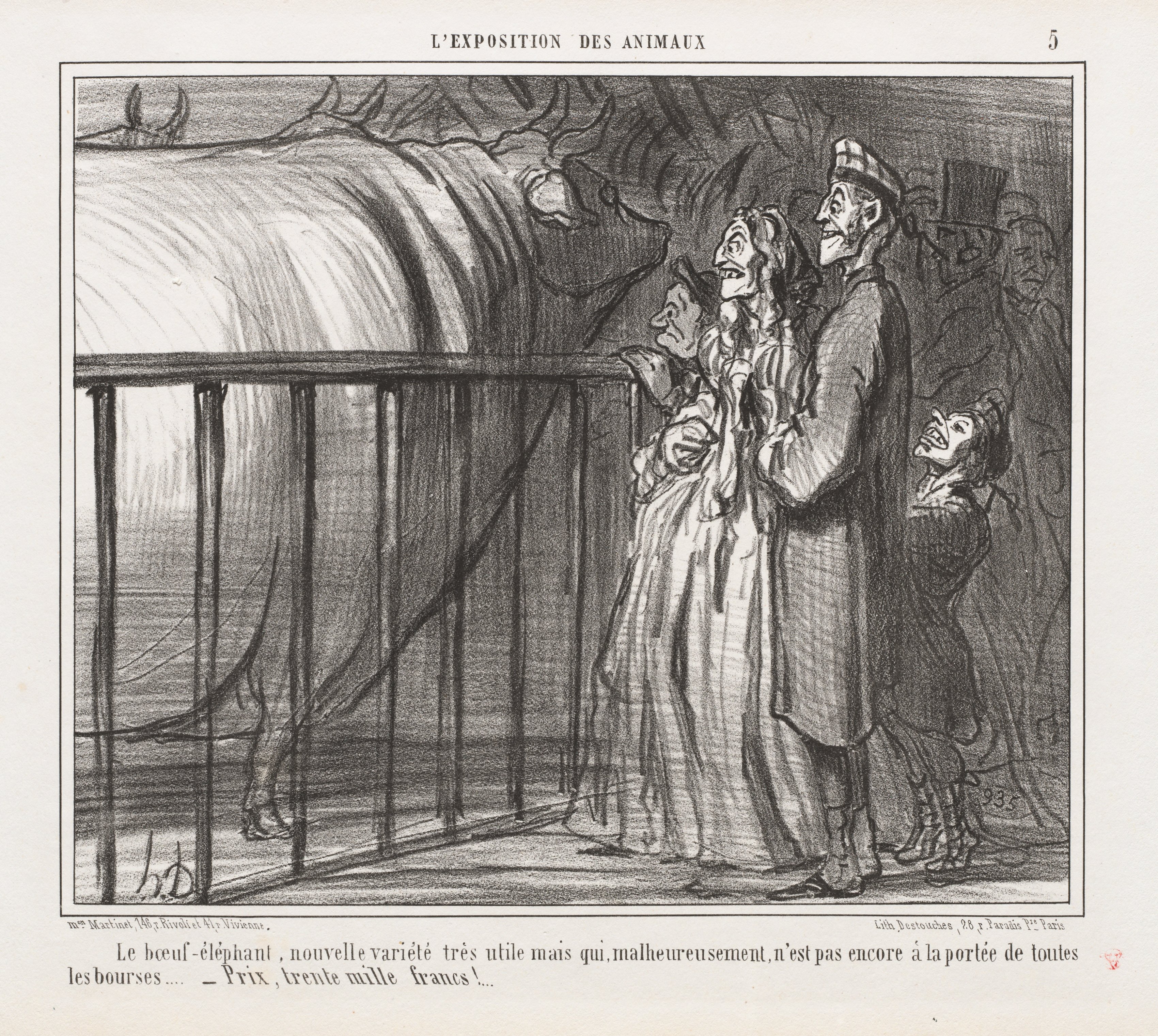
Honoré Daumier
The ox-elephant, a new and very promising breed..., 1856
lithograph
27.8 × 35.8 cm
Cleveland Museum of Art
C24-205098
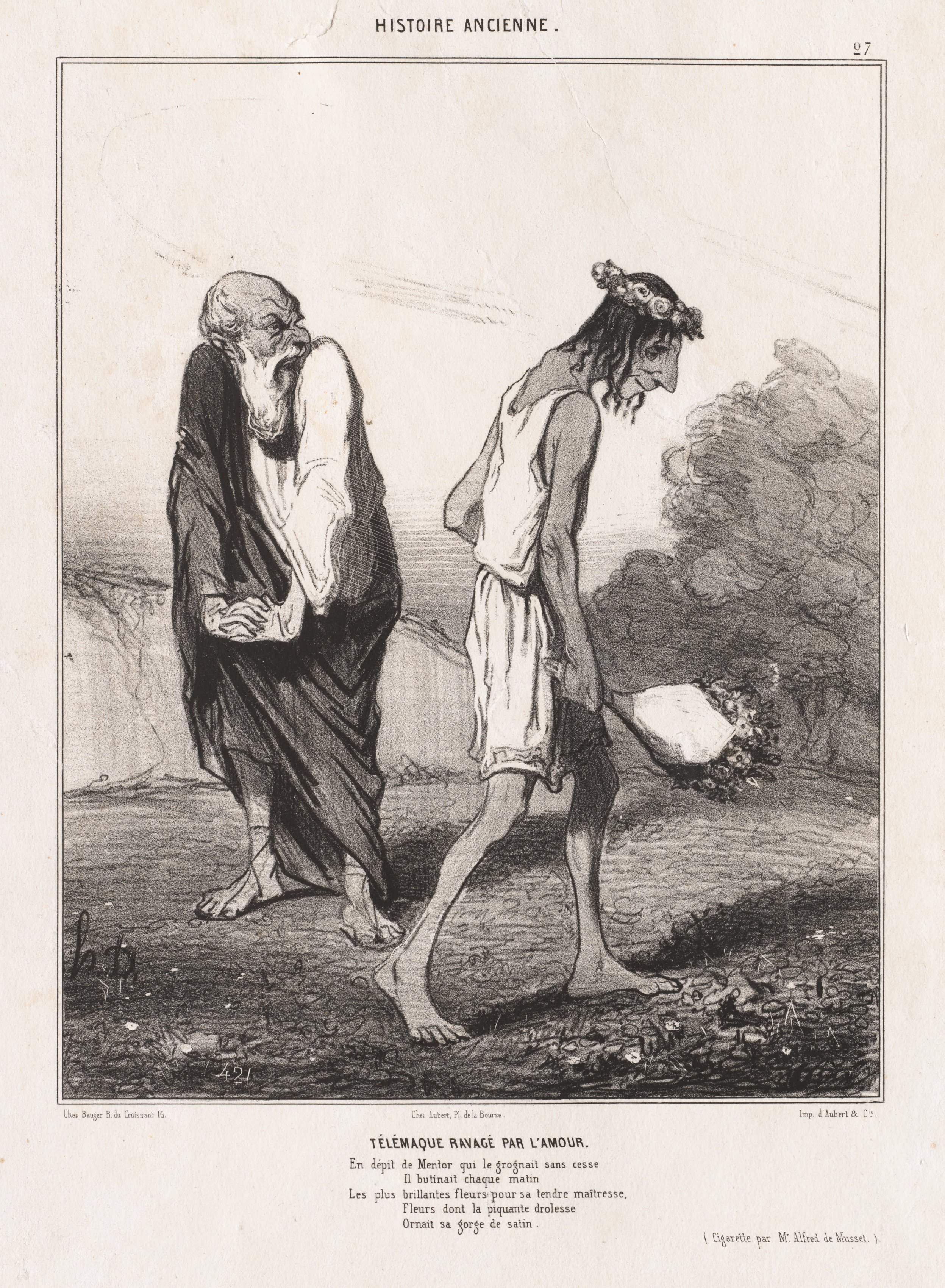
Honoré Daumier
Telemachus Ravaged by Love, 1842
lithograph
34.1 × 24.7 cm
Cleveland Museum of Art
C24-205045
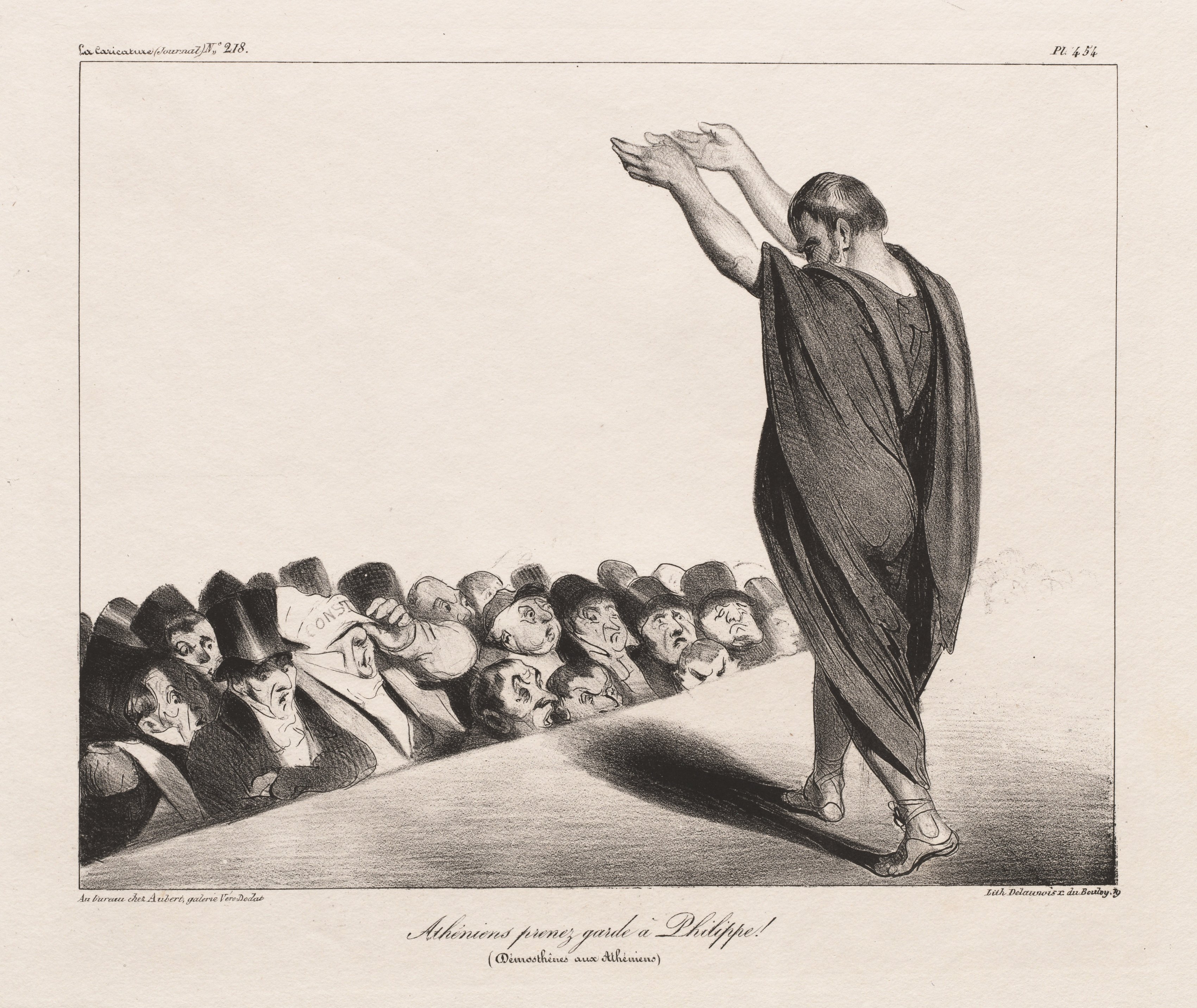
Honoré Daumier
Athenians Beware of Phillip! (Demosthenes to the Athenians), 1835
lithograph
26.2 × 33.6 cm
Cleveland Museum of Art
C24-205029
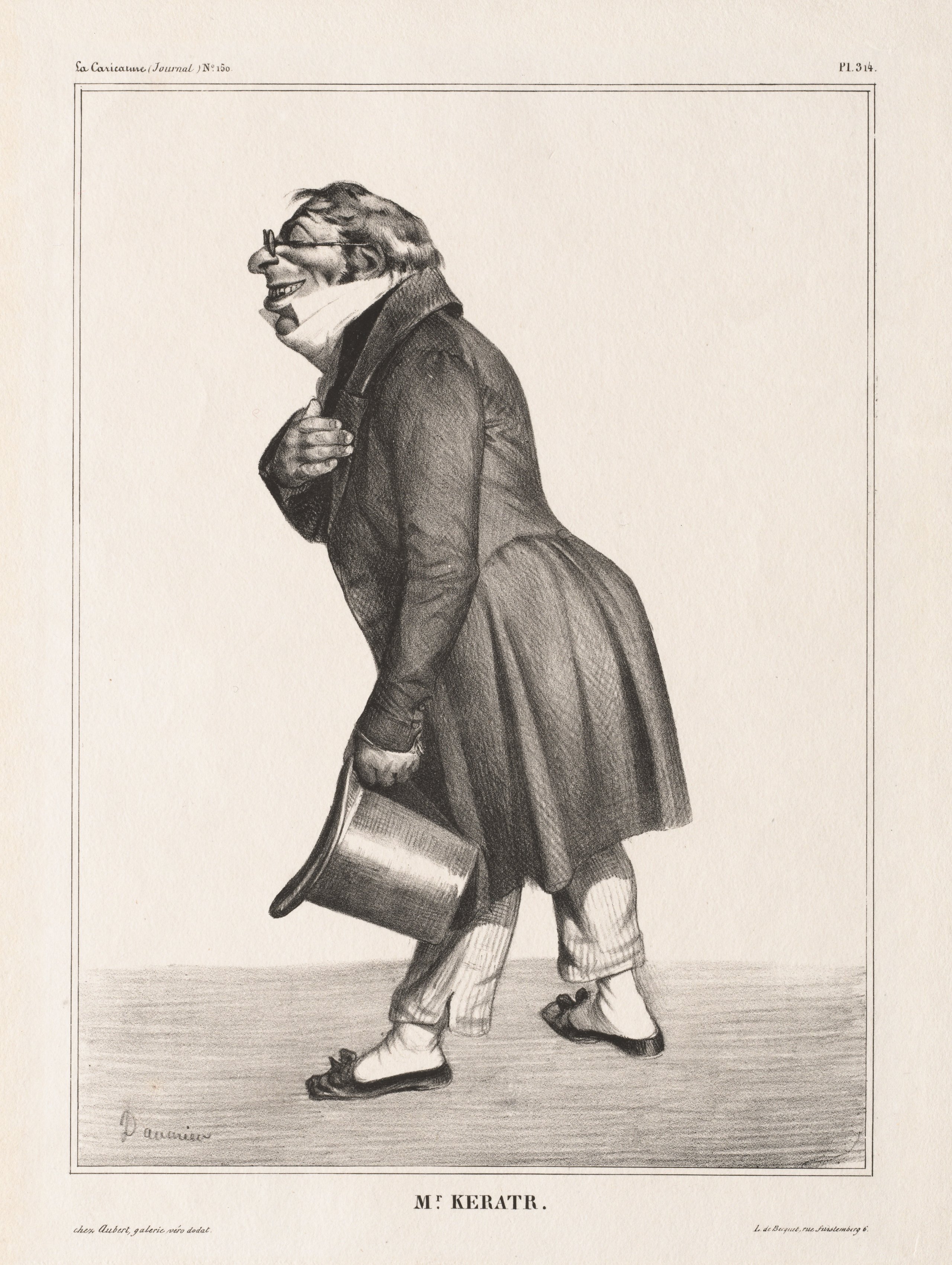
Honoré Daumier
Mr. Keratr., 1833
lithograph
36.2 × 26.5 cm
Cleveland Museum of Art
C24-204517
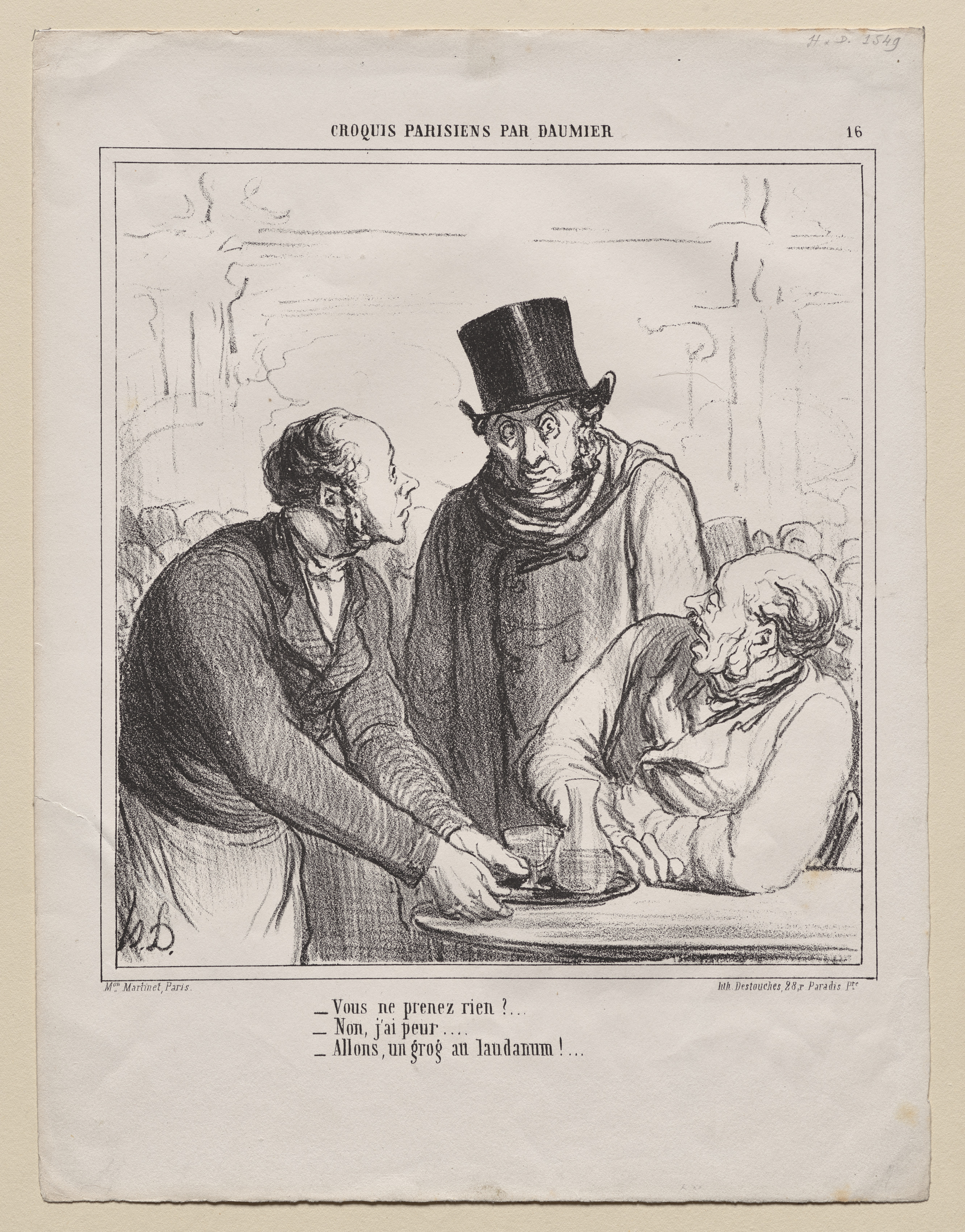
Honoré Daumier
Are you not ordering anything?..., 1865
lithograph
36 × 27.4 cm
Cleveland Museum of Art
C24-203089
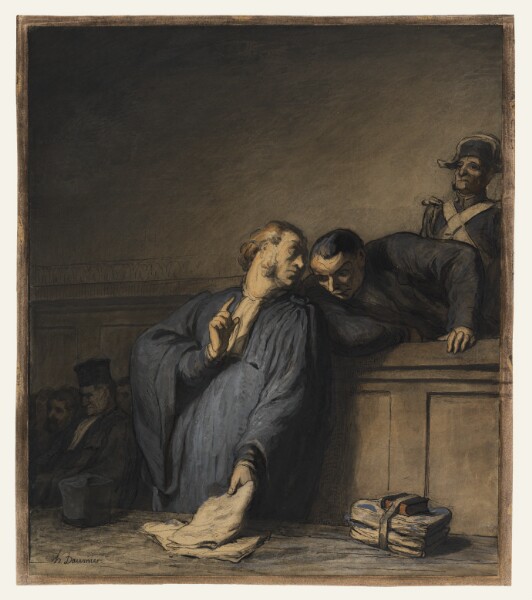
Honoré Daumier
A Criminal Case, about 1865
Watercolor and gouache with pen, brown ink and black chalk
38.4 × 32.5 cm
J. Paul Getty Museum
C24-202592
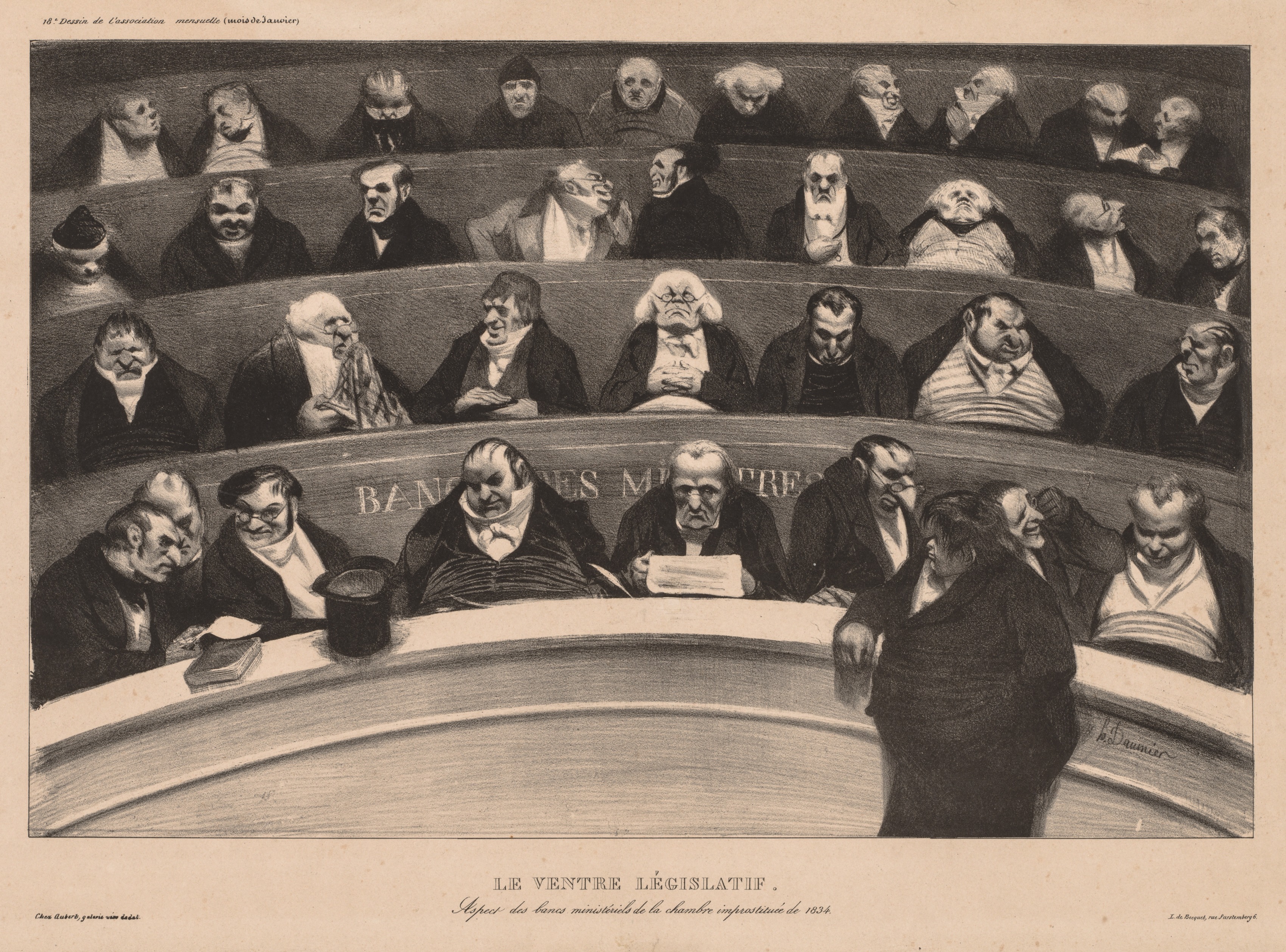
Honoré Daumier
The Legislative Belly, 1834
lithograph
36.2 × 55.7 cm
Cleveland Museum of Art
C24-200941
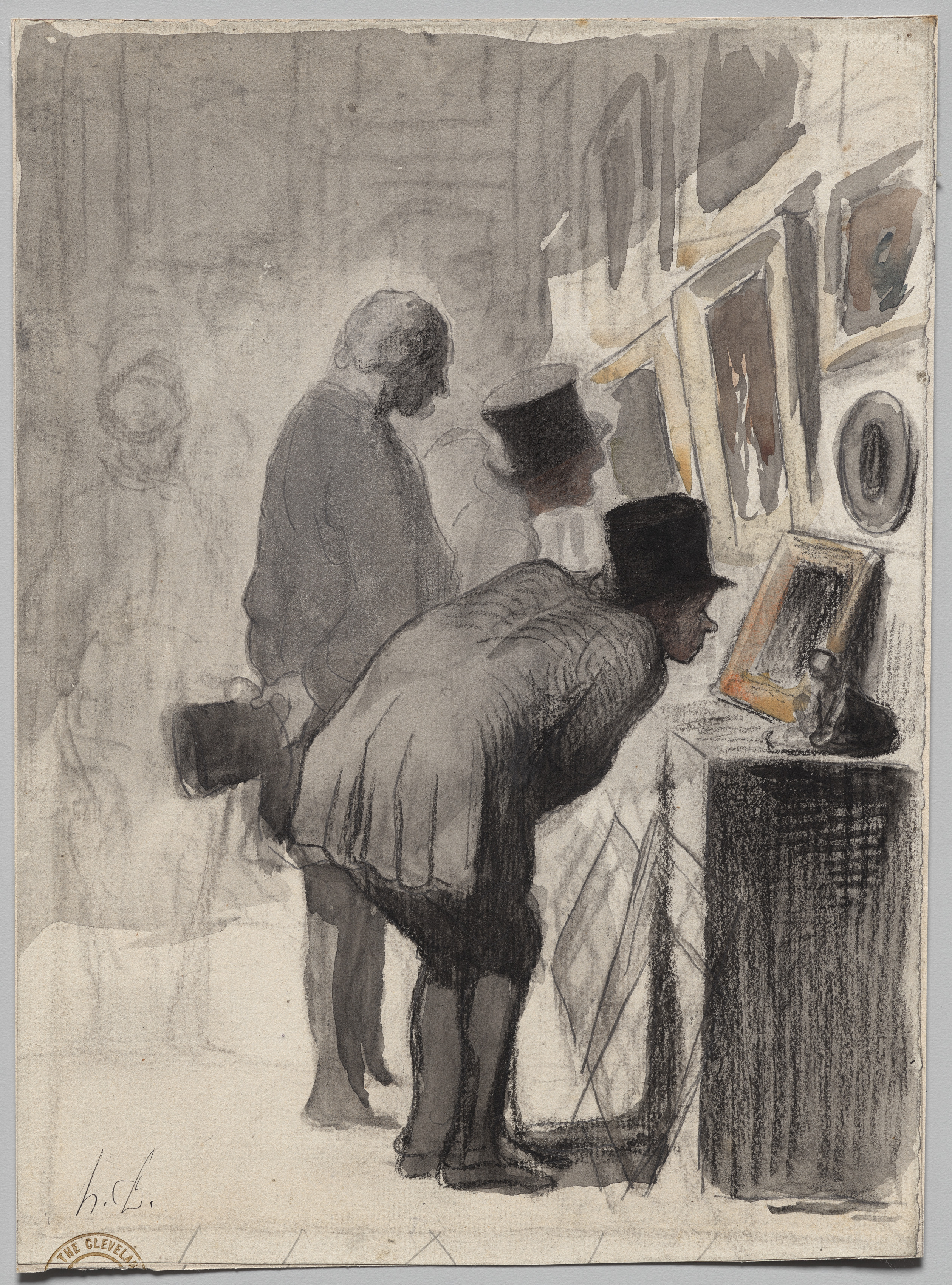
Honoré Daumier
Art Lovers, c. 1863
Gray and black wash, charcoal, and graphite, with watercolor, on cream laid paper
26.2 × 19.4 cm
Cleveland Museum of Art
C24-190771
Museums and collections
Where works by Honoré Daumier are registered
- The Metropolitan Museum of Art
New York, United States
710 works
- Cleveland Museum of Art
Cleveland, United States
150 works
- Musée Carnavalet
Paris, France
36 works
- Maison de Balzac
Paris, France
33 works
- Finnish National Gallery
Helsinki, Finland
26 works
- Maison de Victor Hugo
Paris, France
8 works
- Victoria and Albert Museum
London, United Kingdom
7 works
- National Gallery of Art
Washington, D.C., United States
6 works
- Petit Palais
Paris, France
5 works
- SMK – National Gallery of Denmark
Copenhagen, Denmark
5 works
- Museum of Fine Arts Boston
United States
3 works
- Belvedere
Austria
2 works
- J. Paul Getty Museum
Los Angeles, United States
2 works
- Kunsthalle Bremen
Germany
1 work
- Rijksmuseum
Amsterdam, Netherlands
1 work
Registry catalogue
Search all 995 works by Honoré Daumier
The complete catalogue lets you search by title, year, collection, medium or Collect24 Art ID, and filter by period, medium and collection.
Open the full catalogue →Artists from the same period
French artists born around the same time
- Edouard Baldus
1813–1889
717 works
- Eugène Delacroix
1798–1863
477 works
- Edgar Degas
1834–1917
373 works
- Alphonse Legros
1837–1911
349 works
- Edouard Manet
1832–1883
277 works
- Charles-François Daubigny
1817–1878
226 works
- Jean-François Millet
1814–1875
202 works
- Charles Jacque
1813–1894
198 works