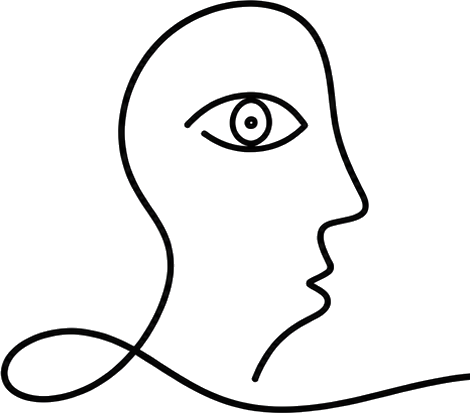

.jpg?width=900)
Wikimedia Commons · See source page for licence
Artist in the Global Art Registry
August Strindberg
1849–1912 · Swedish
- Born
- 1849 · Stockholm
- Died
- 1912 · Adolf Fredriks parish
7 works in the Collect24 Registry
Every work carries a permanent Collect24 Art ID, the way a book has an ISBN.
Johan August Strindberg was a Swedish playwright, novelist, poet, essayist, and painter, known for writing more than 60 plays and over 30 works of fiction, autobiography, history, cultural analysis, and politics. He is considered the "father" of modern Swedish literature and explored a wide range of dramatic methods.
Read full biography
Johan August Strindberg (; Swedish: [ˈǒːɡɵst ˈstrɪ̂nːdbærj] ; 22 January 1849 – 14 May 1912) was a Swedish playwright, novelist, poet, essayist, and painter. A prolific writer who often drew directly on his personal experience, Strindberg wrote more than 60 plays and more than 30 works of fiction, autobiography, history, cultural analysis, and politics during his career, which spanned four decades. A bold experimenter and iconoclast throughout his life, he explored a wide range of dramatic methods and purposes, from naturalistic tragedy, monodrama, and historical plays to his anticipations of expressionist and surrealist dramatic techniques. From his earliest work, Strindberg developed innovative forms of dramatic action, language, and visual composition. He is considered the "father" of modern Swedish literature and his The Red Room (1879) has frequently been described as the first modern Swedish novel. In Sweden, Strindberg is known as an essayist, painter, poet, and especially novelist and playwright, but in other countries he is known mostly as a playwright. The Royal Theatre rejected his first major play, Master Olof, in 1872; it was not until 1881, when he was thirty-two, that its première at the New Theatre gave him his theatrical breakthrough. In his plays The Father (1887), Miss Julie (1888), and Creditors (1889), he created naturalistic dramas that – building on the established accomplishments of Henrik Ibsen's prose problem plays while rejecting their use of the structure of the well-made play – responded to the call-to-arms of Émile Zola's manifesto "Naturalism in the Theatre" (1881) and the example set by André Antoine's newly established Théâtre Libre (opened 1887). In Miss Julie, characterisation replaces plot as the predominant dramatic element (in contrast to melodrama and the well-made play) and the determining role of heredity and the environment on the "vacillating, disintegrated" characters is emphasized. Strindberg modeled his short-lived Scandinavian Experimental Theatre (1889) in Copenhagen on Antoine's theatre and he explored the theory of Naturalism in his essays "On Psychic Murder" (1887), "On Modern Drama and the Modern Theatre" (1889), and a preface to Miss Julie, the last of which is probably the best-known statement of the principles of the theatrical movement. During the 1890s he spent significant time abroad engaged in scientific experiments and studies of the occult. A series of apparent psychotic attacks between 1894 and 1896 (referred to as his "Inferno crisis") led to his hospitalization and return to Sweden. Under the influence of the ideas of Emanuel Swedenborg, he resolved after his recovery to become "the Zola of the Occult". In 1898 he returned to play-writing with To Damascus, which, like The Great Highway (1909), is a dream-play of spiritual pilgrimage. His A Dream Play (1902) – with its radical attempt to dramatize the workings of the unconscious by means of an abolition of conventional dramatic time and space and the splitting, doubling, merging, and multiplication of its characters – was an important precursor to both expressionism and surrealism. He also returned to writing historical drama, the genre with which he had begun his play-writing career. He helped to run the Intimate Theatre from 1907, a small-scale theatre in Stockholm, modeled on Max Reinhardt's Kammerspielhaus, that staged his chamber plays (such as The Ghost Sonata).
Biography source: Wikipedia · CC BY-SA 4.0
Unclaimed estate profile
This profile was built from publicly available information. Nobody representing the estate of August Strindberg manages it yet. If you represent the estate or foundation, claim the profile to control the biography, portrait and registered works.
Claim this estate profileSpotted something incorrect? Sign in to suggest an edit — our editors review every change.
7
Registered works
7
In museum collections
0
In gallery collections
0
In private collections
Featured works
Selected registered works by August Strindberg
Selected from 7 works by August Strindberg in the Collect24 Registry.
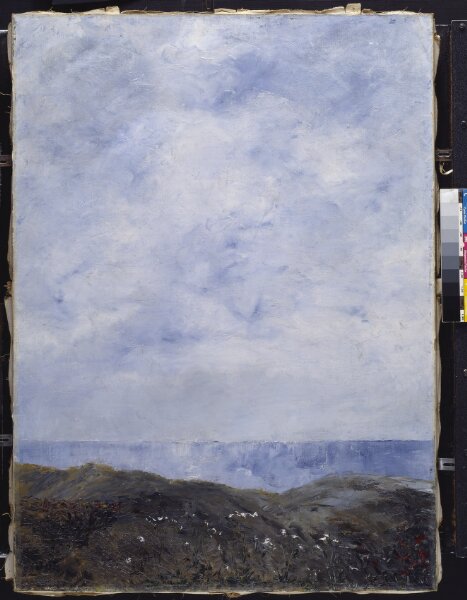
August Strindberg
Kustlandskap II, 1903
Nationalmuseum Sweden
C24-173113
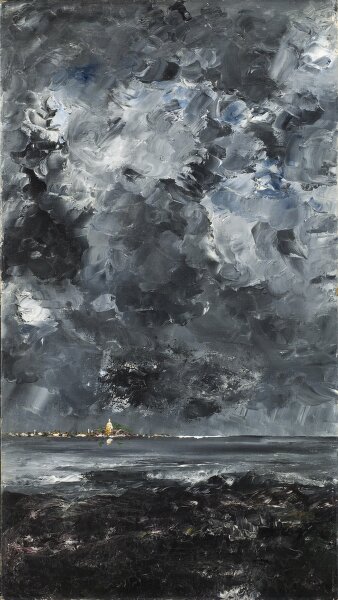
August Strindberg
Staden, 1903
Nationalmuseum Sweden
C24-172787
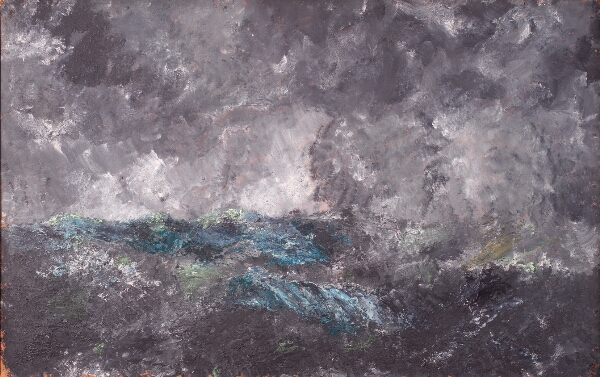
August Strindberg
Uvejr i Skærgården. "Den flyvende hollænder", Dalarö, 1892
Voksfarve på pap
62 × 98 × 7 cm
SMK – National Gallery of Denmark
C24-110899
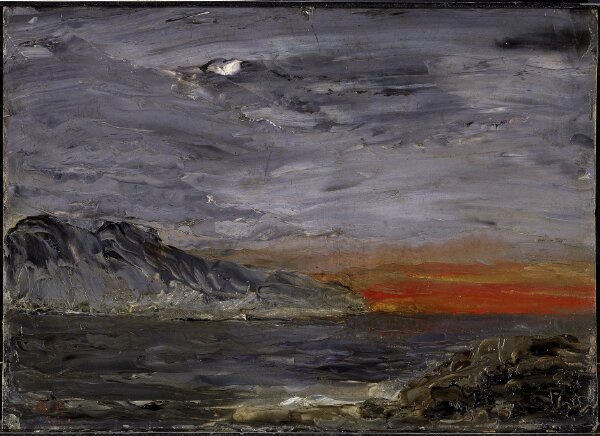
August Strindberg
Solnedgång, 1892
Nationalmuseum Sweden
C24-172576
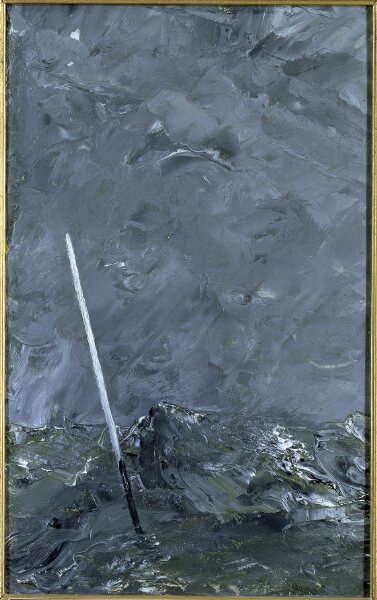
August Strindberg
Stormigt hav. Slätprick., 1892
Nationalmuseum Sweden
C24-172575
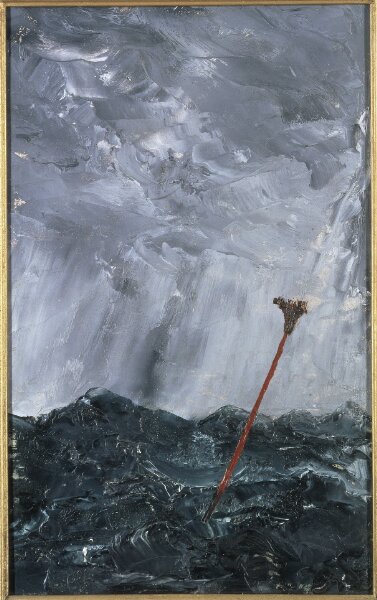
August Strindberg
Stormigt hav. Ruskprick, 1892
Nationalmuseum Sweden
C24-172574
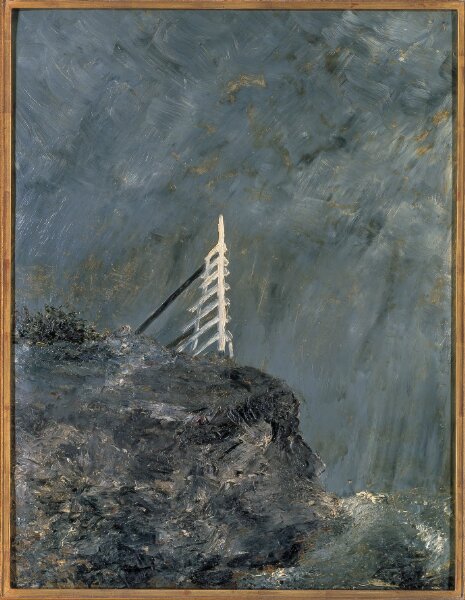
August Strindberg
Vita Märrn II
Nationalmuseum Sweden
C24-171937
Museums and collections
Where works by August Strindberg are registered
- Nationalmuseum Sweden
Stockholm, Sweden
6 works
- SMK – National Gallery of Denmark
Copenhagen, Denmark
1 work
Registry catalogue
Search all 7 works by August Strindberg
The complete catalogue lets you search by title, year, collection, medium or Collect24 Art ID, and filter by period, medium and collection.
Open the full catalogue →Artists from the same period
Swedish artists born around the same time
- Axel Sjöberg
1866–1950
7,238 works
- Anders Zorn
1860–1920
244 works
- Karl Isakson
1878–1922
195 works
- Ernst Josephson
1851–1906
41 works
- Karl Nordström
1855–1923
26 works
- Richard Bergh
1858–1919
24 works
- Nils Kreuger
1858–1930
23 works
- Bruno Liljefors
1860–1939
22 works